Every Plavon build starts here.
The screens and the pieces a client’s tool is made of, in French and English, so the mockup shown in a meeting and the tool we ship look like one studio made them.
- 15 layouts
- 70 pieces in 12 sections
- French and English
Starting a client’s app? Give the agent the context, then name what to build by ID: sidebar.rail, record.cards, auth.code. Every screen shows its ID in the bar at its foot.
Layouts
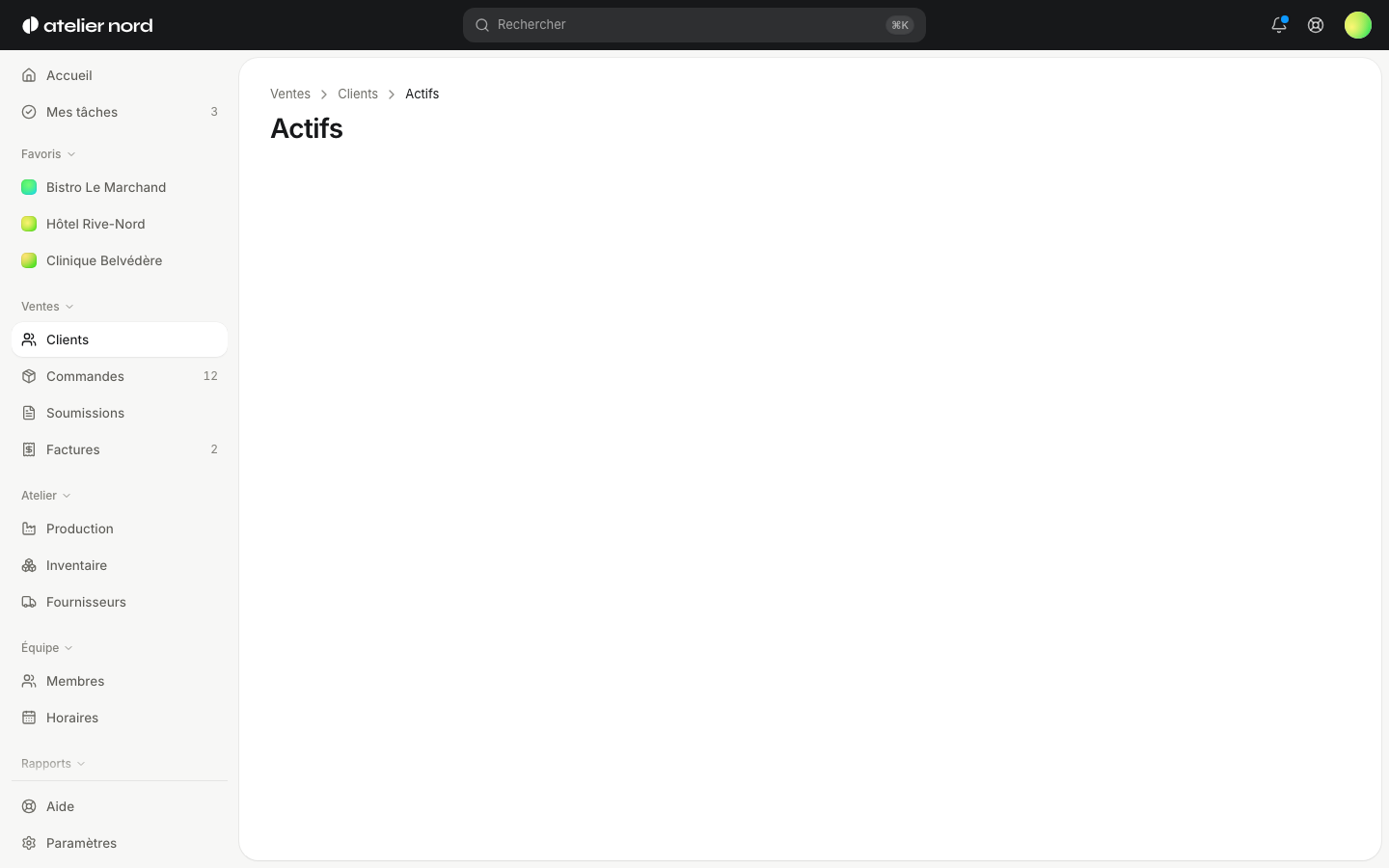
15 of 15 designed- Sidebars36 combinationsThe app's frame in parts: four sidebars, three top bars and three page headers, each switched on its own.
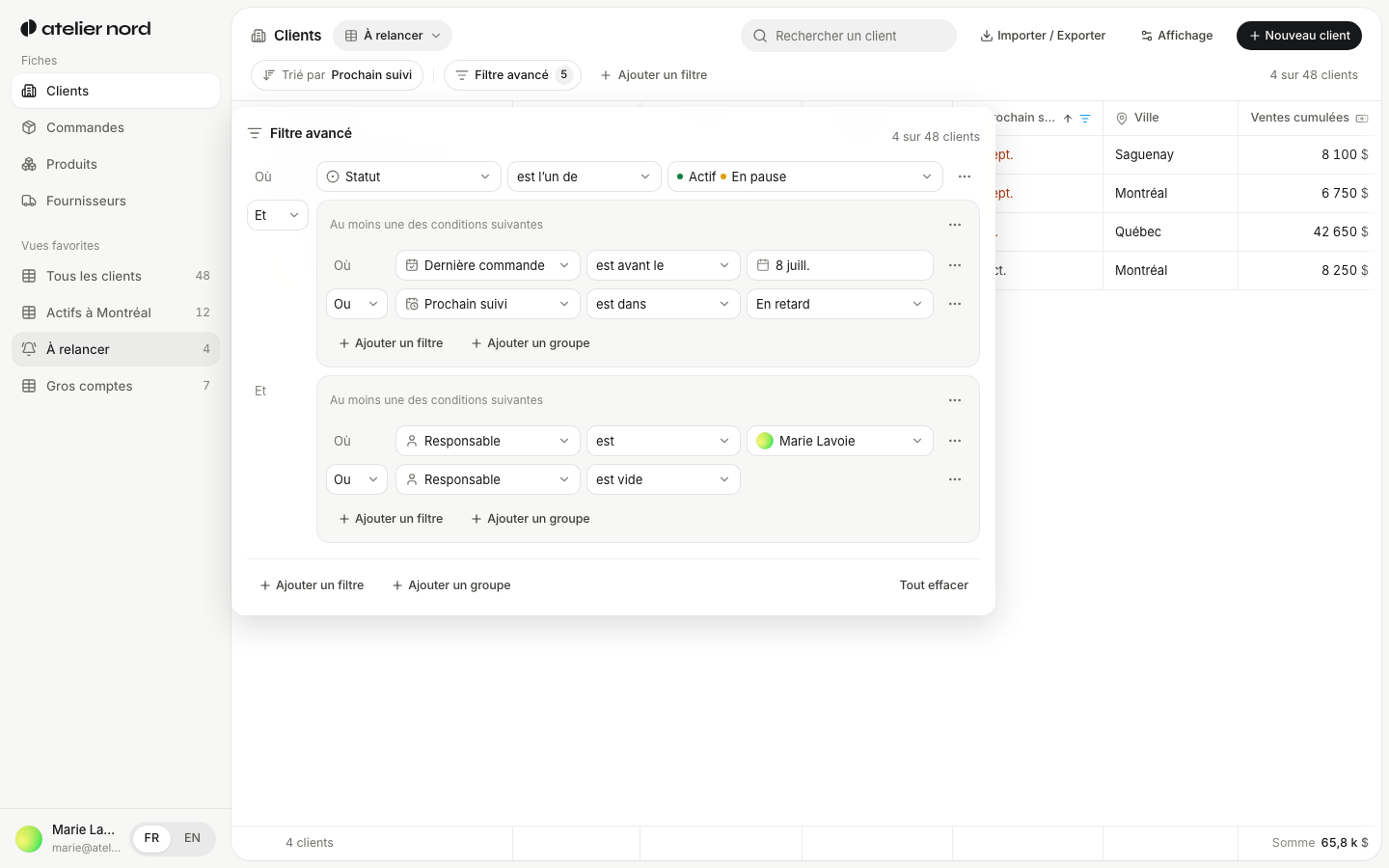
- Data tableAttio's table: saved views, chips and an advanced filter of nested groups, sorts, calculations, bulk actions.
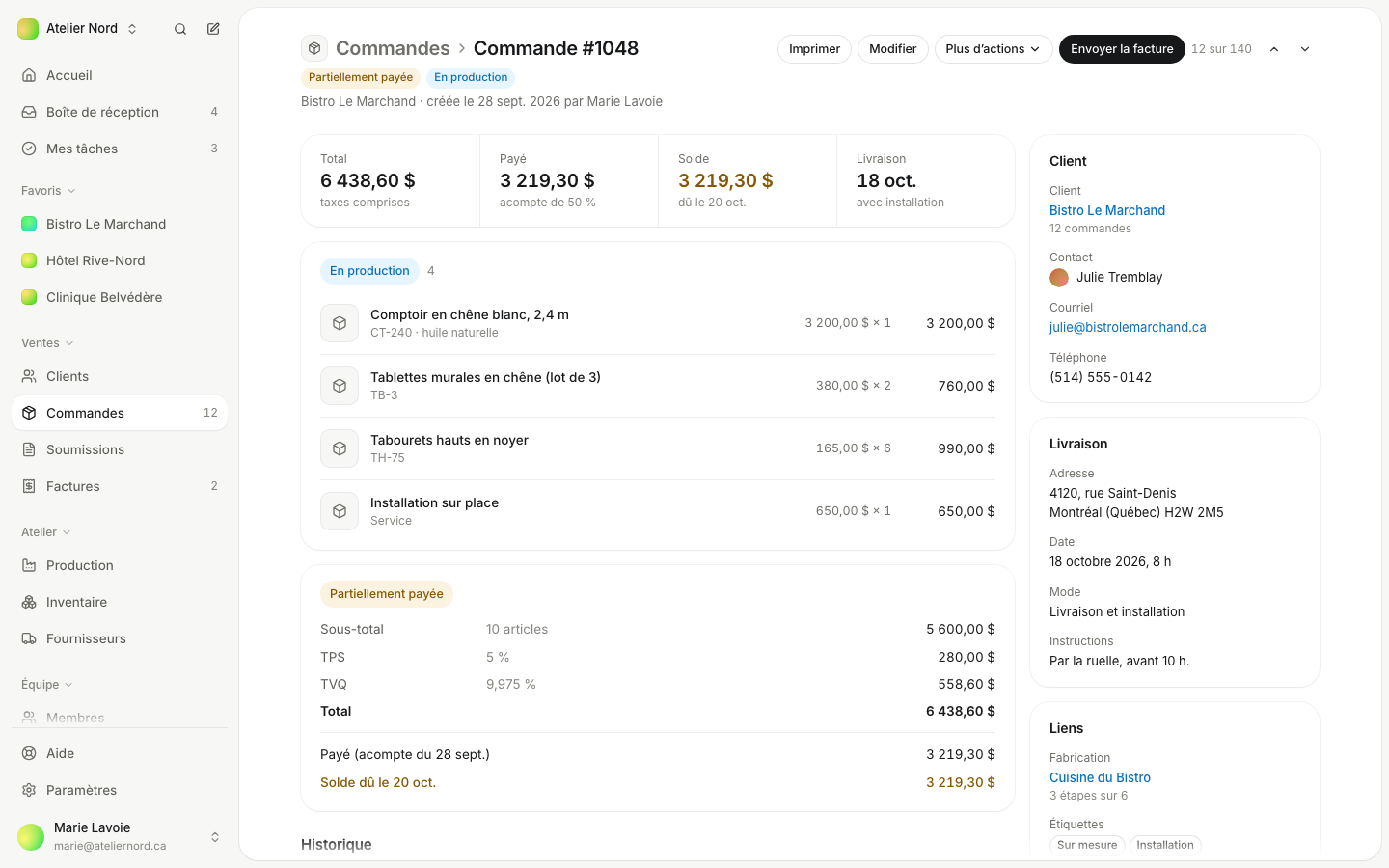
- Record page12 combinationsOne client, order or job in four layouts: cards, a panel, a document, a profile. Linked, with a timeline.
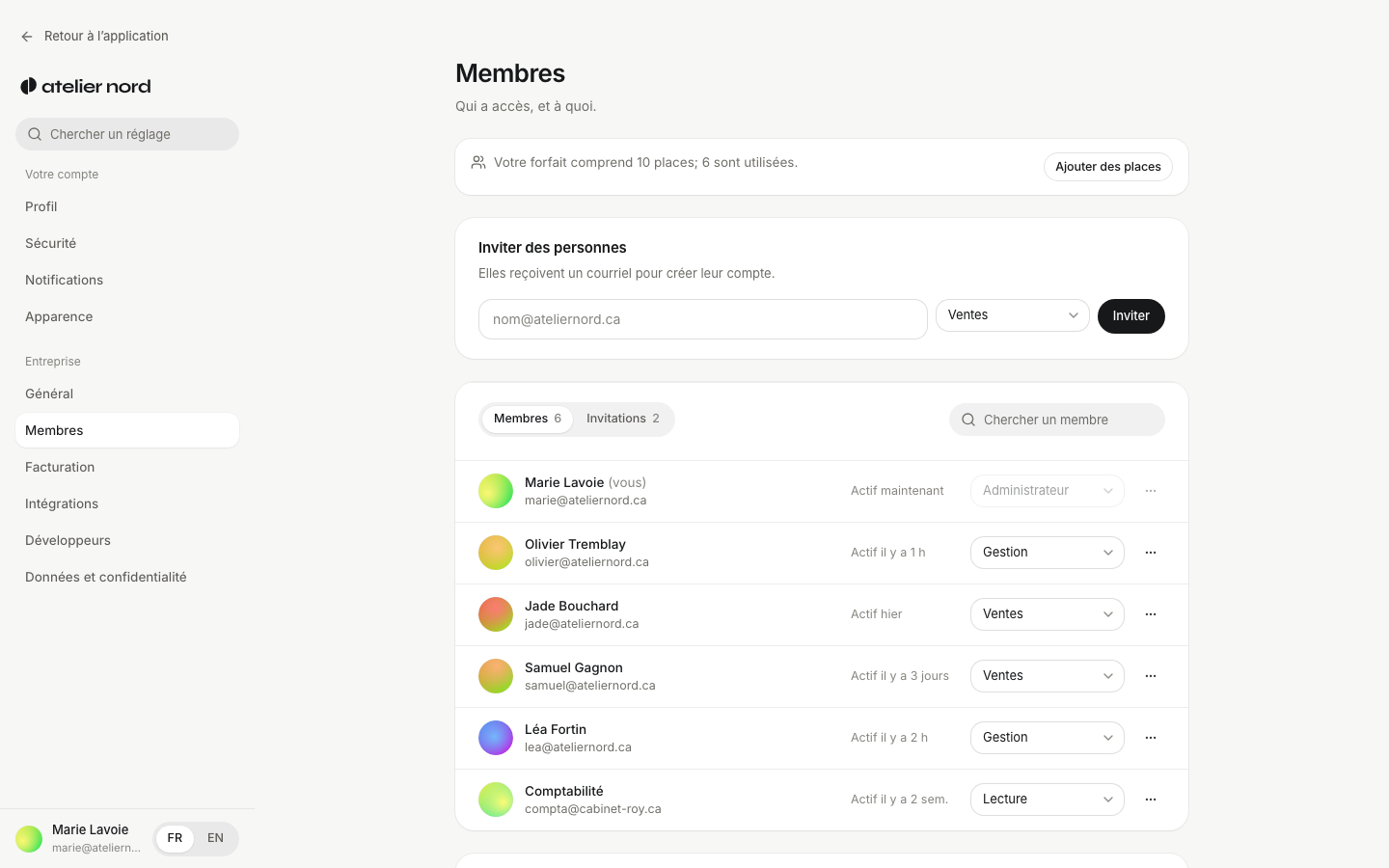
- Settings10 screensTen pages of settings, from a profile to API keys, built from one kit of blocks.
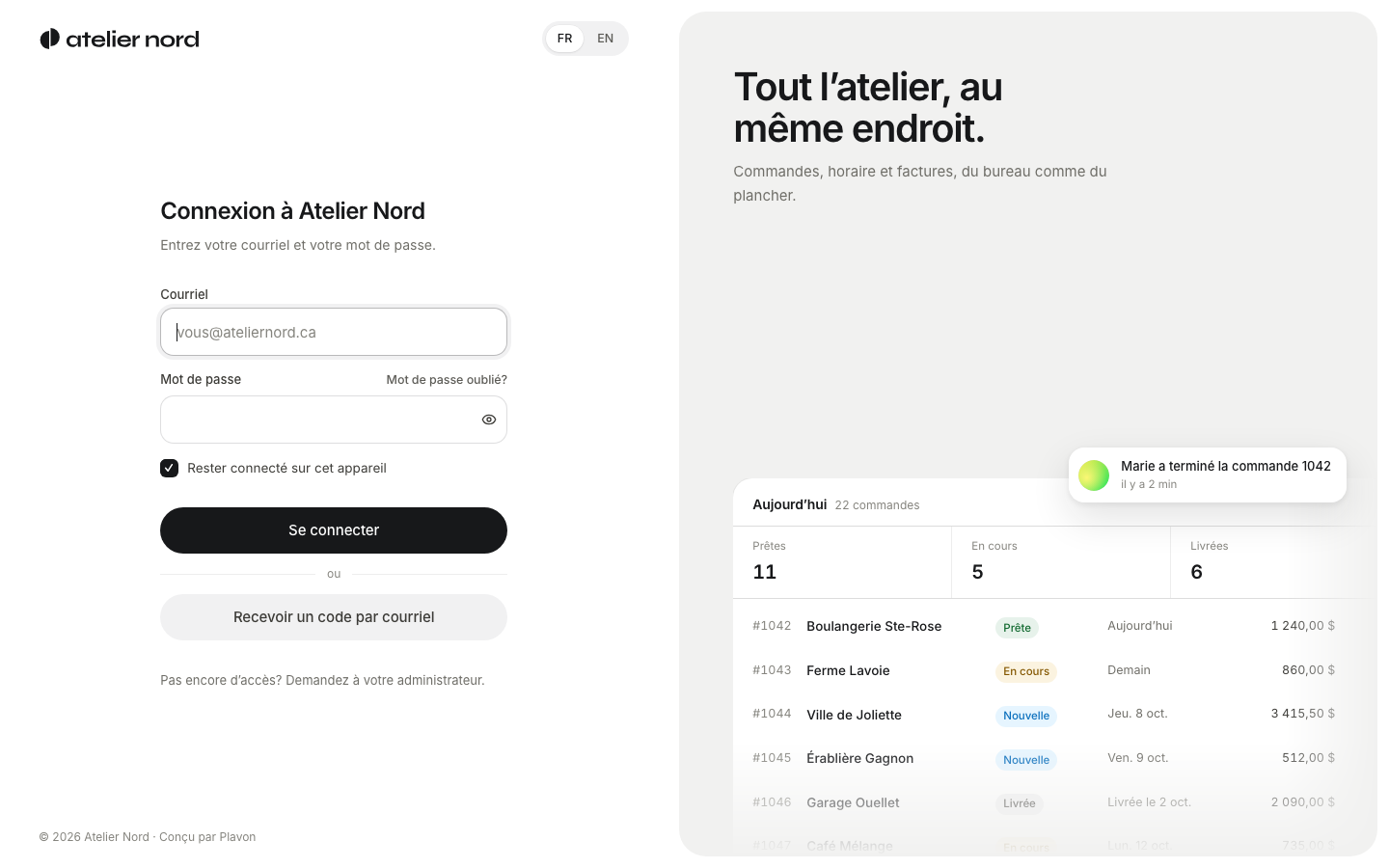
- Sign in36 combinationsEvery way in (password, code, magic link, SSO, two-step, the account pages) in four frames, from a split with a brand panel to the form alone.
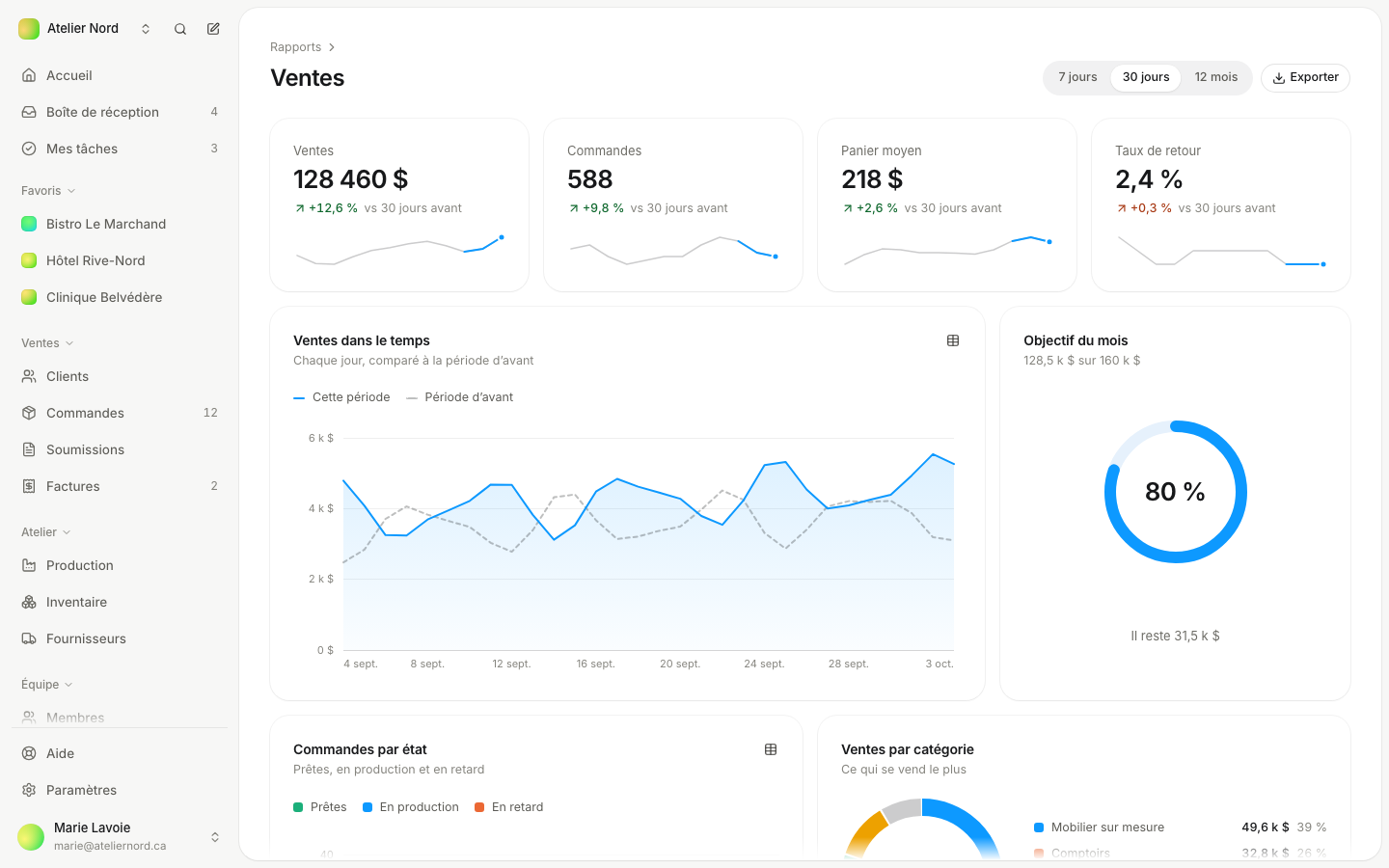
- ChartsA sales report made of the cards a dashboard is built from: figures, a trend, a goal, stacked columns, a donut, a ranking, a heatmap.
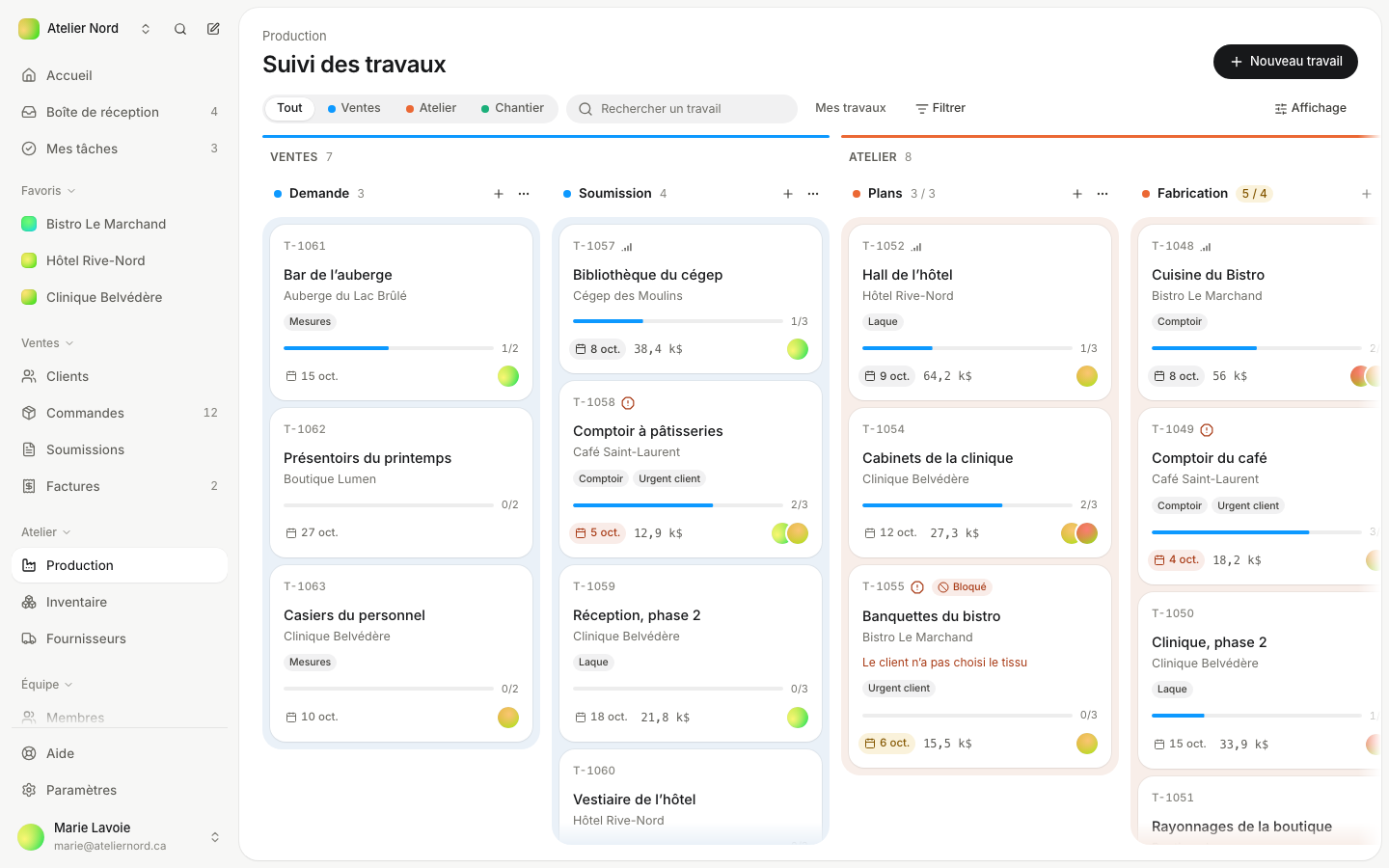
- Job boardEvery job a card in the column of its stage: drag by mouse, touch or keyboard, lanes by person, client or priority, limits, filters, a sheet per job.
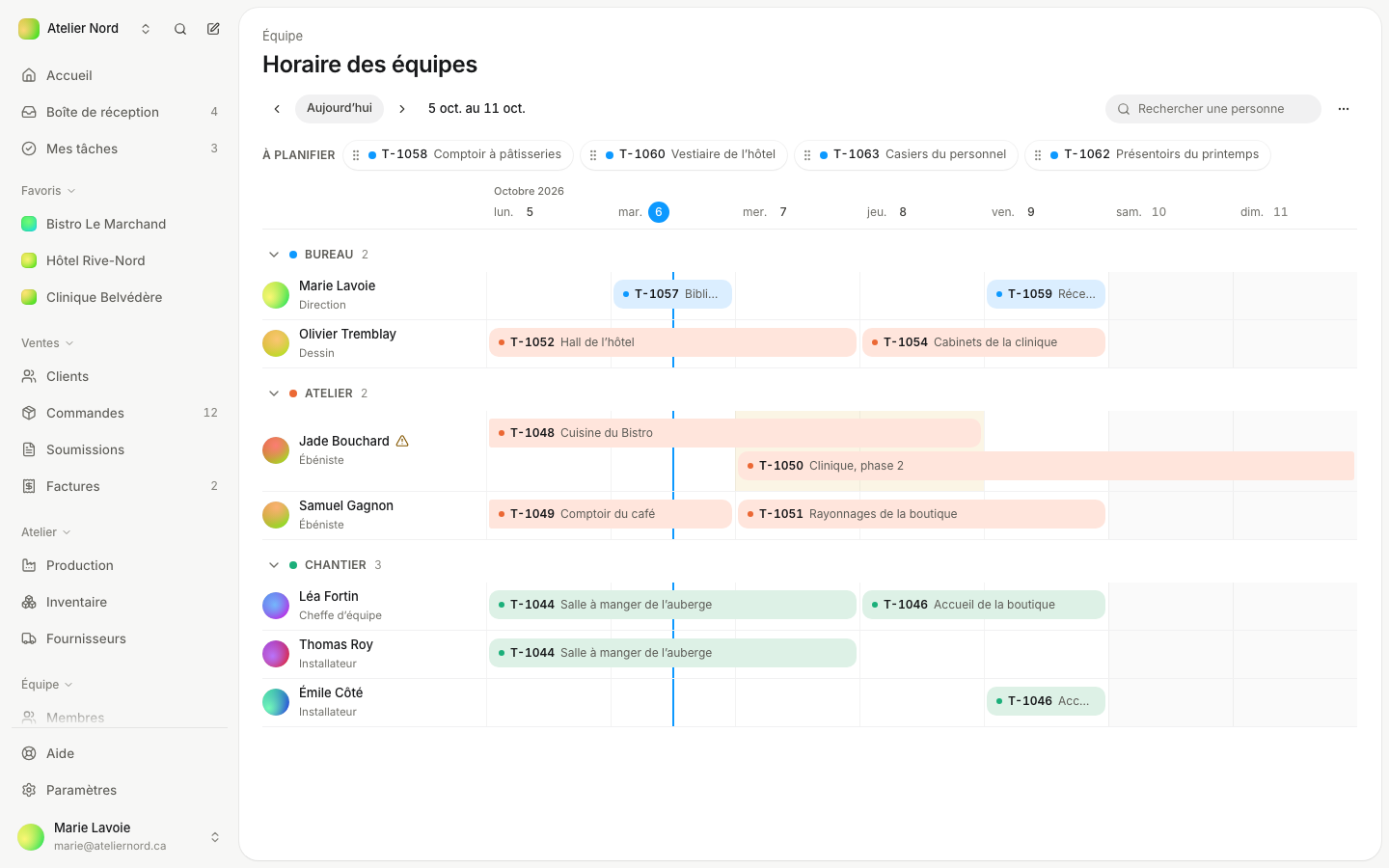
- Crew scheduleWho is on which job on which day: crews down the side, days across, bookings as bars to drag, stretch and hand to someone else, double bookings and load.
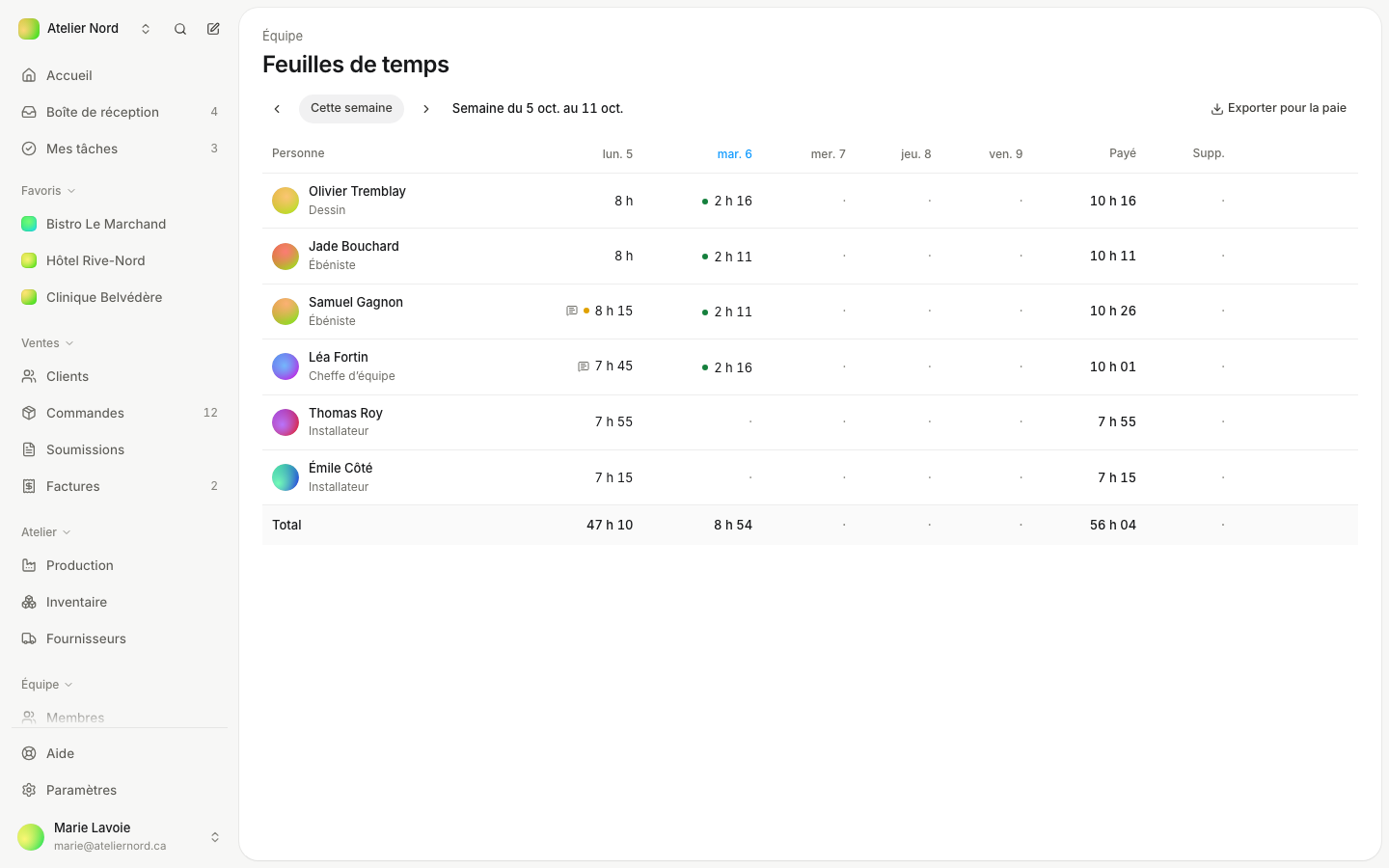
- Punch and timesheet2 screensThe hours: a punch on the phone at the job site, and the week's timesheet at the office with overtime, approval and the payroll file.
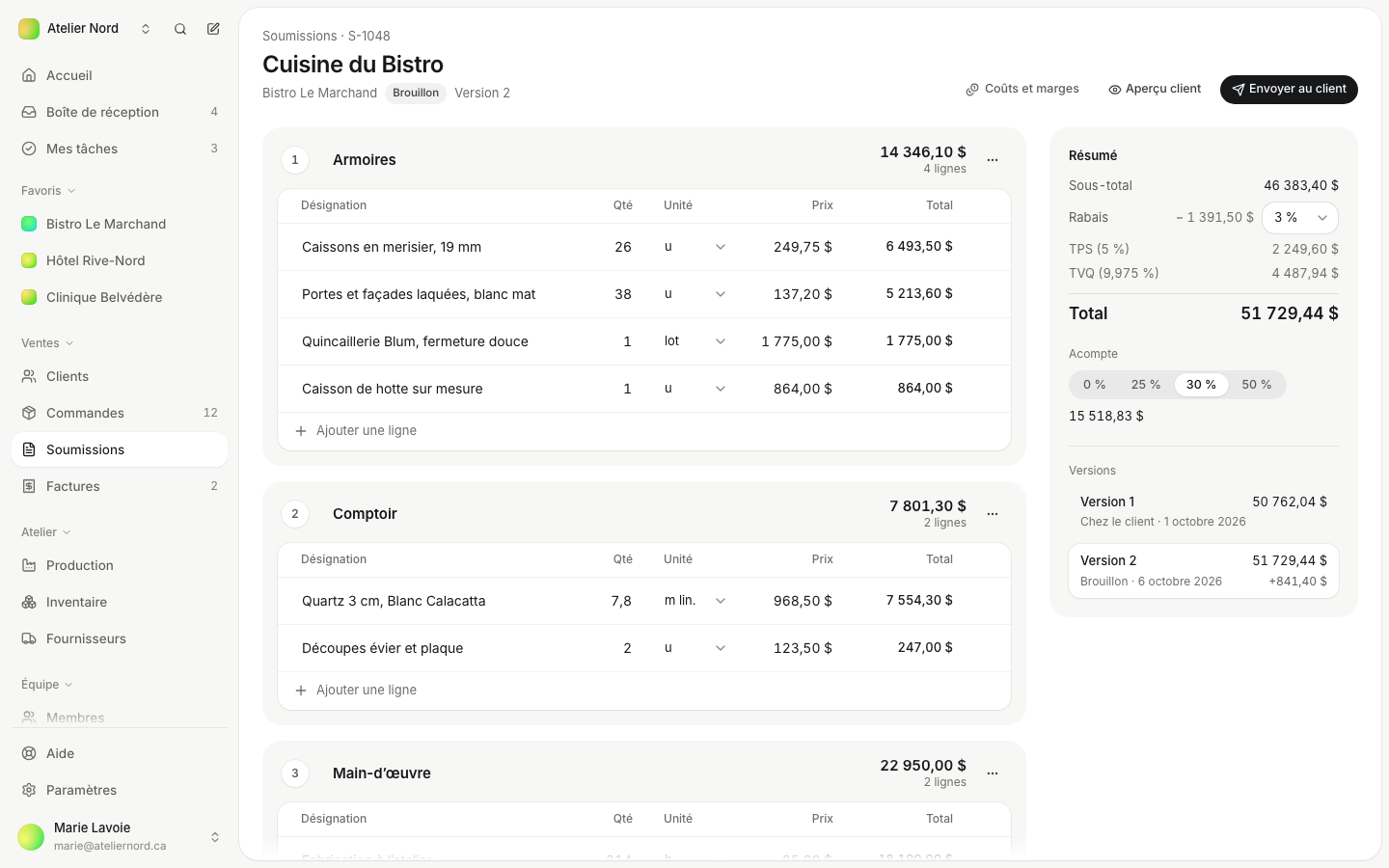
- Quote2 screensA job's quote: lines by section with costs and margins, GST and QST, a deposit, versions, and the page the client accepts and signs.
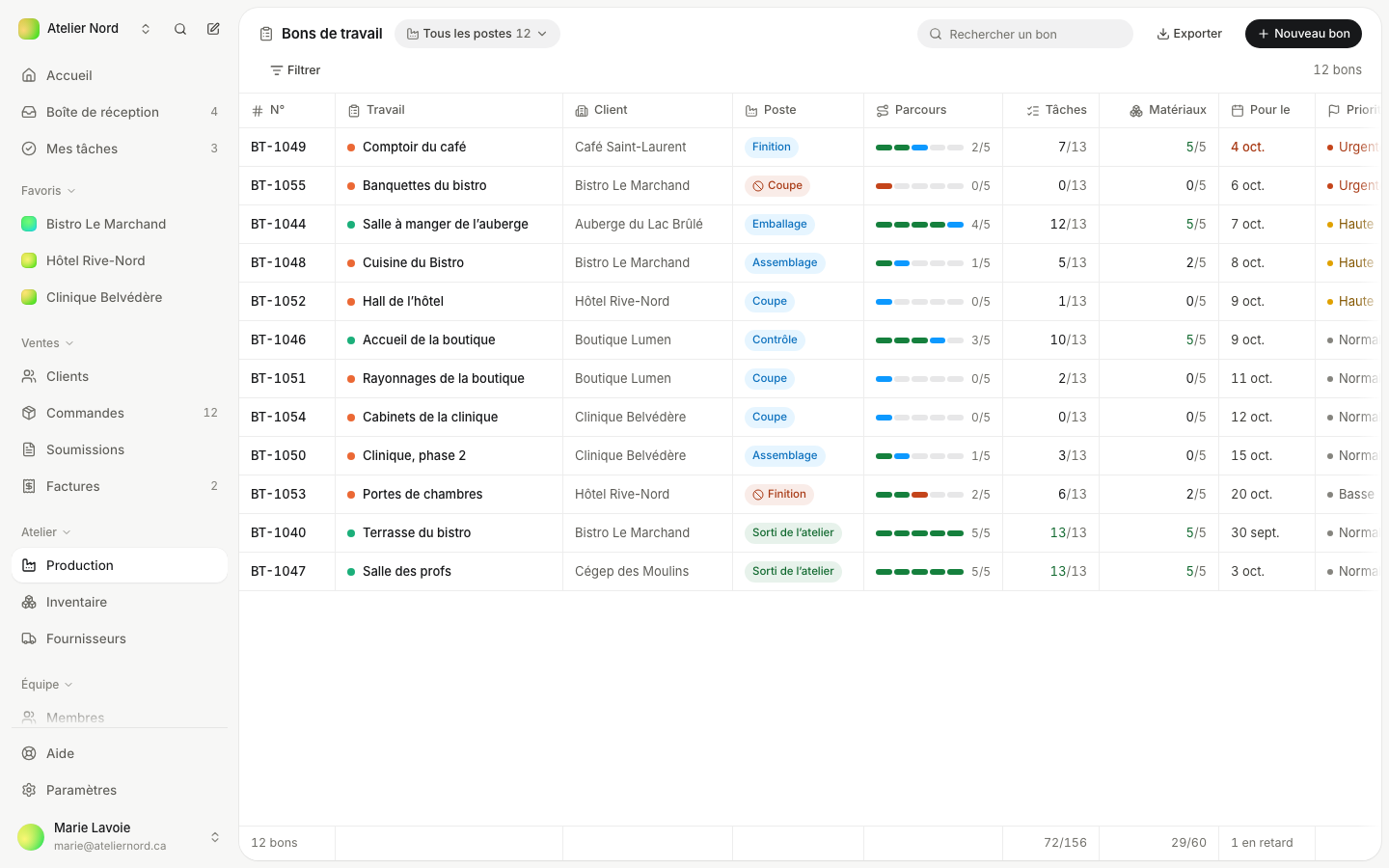
- Work order2 screensA job's way through the shop: five stations with their tasks, photos and sign-offs, the materials to pull, at the office and on the station's tablet.
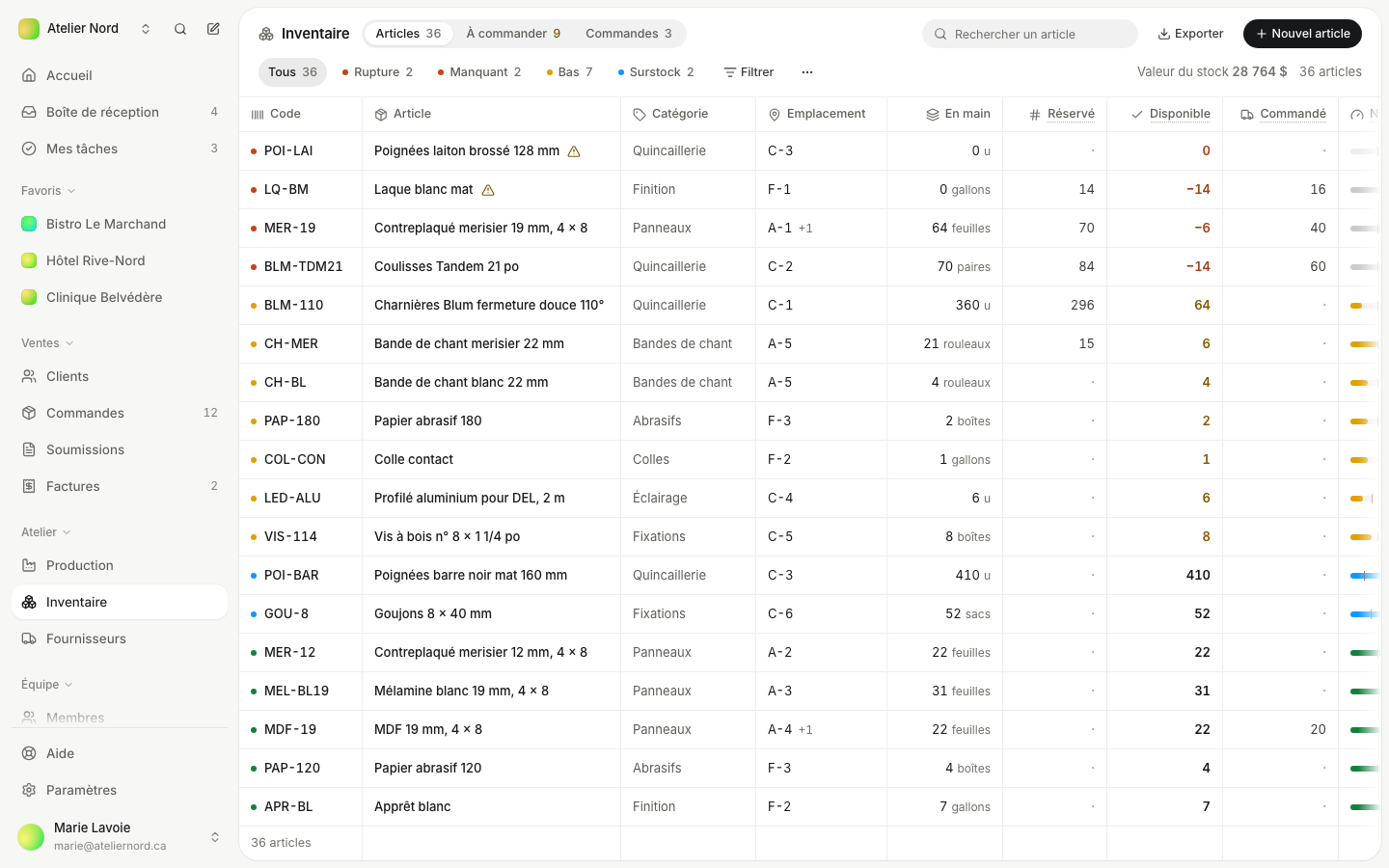
- Stock2 screensThe shop's stores: every item's level against what the work orders reserve and what is on its way, what to order by supplier, the purchase orders received line by line, and a blind count on the floor.
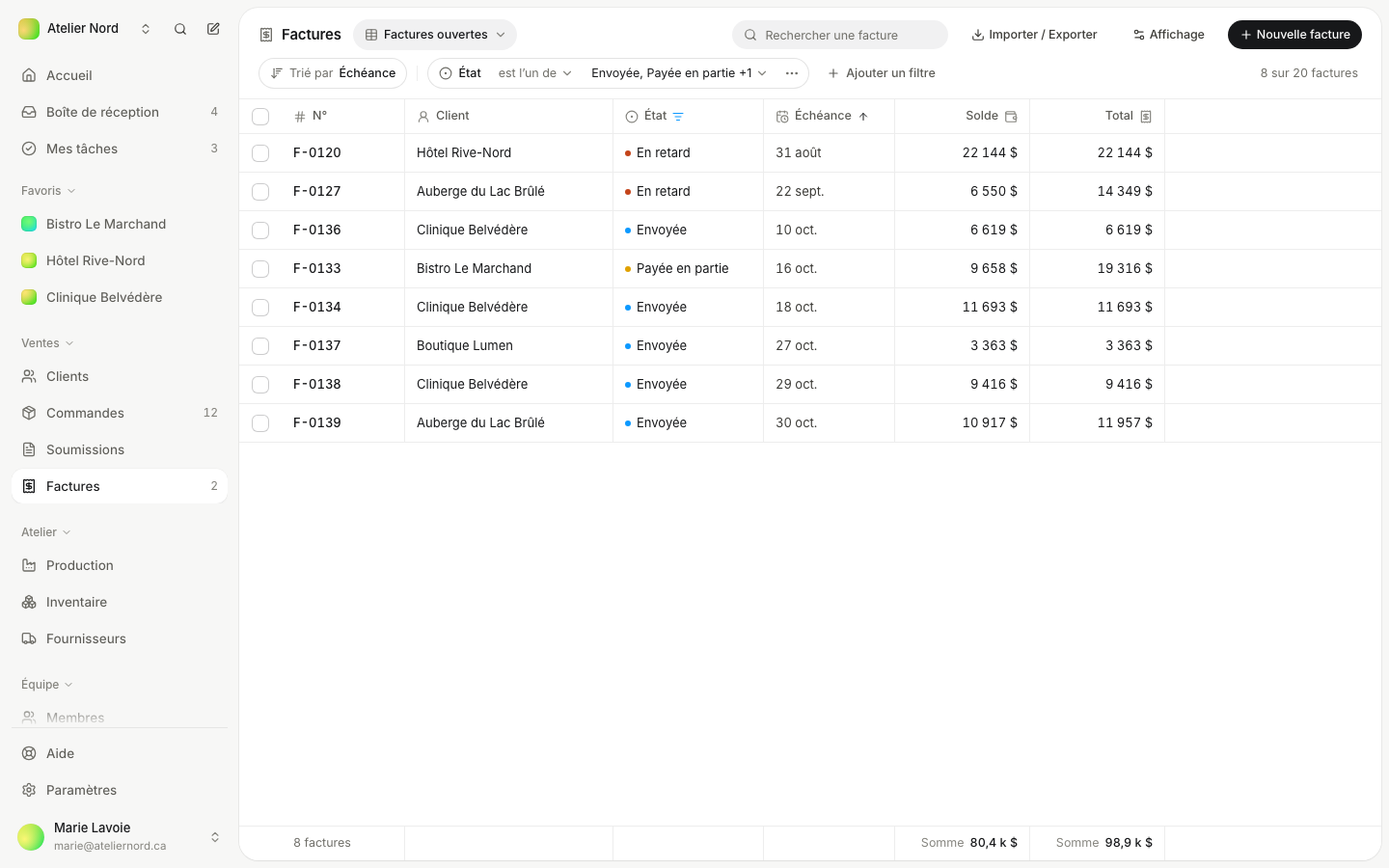
- Invoices2 screensGetting paid: deposits, progress billings with the holdback kept back, final invoices, payments and reminders, what is owed by age, and the page the client reads.
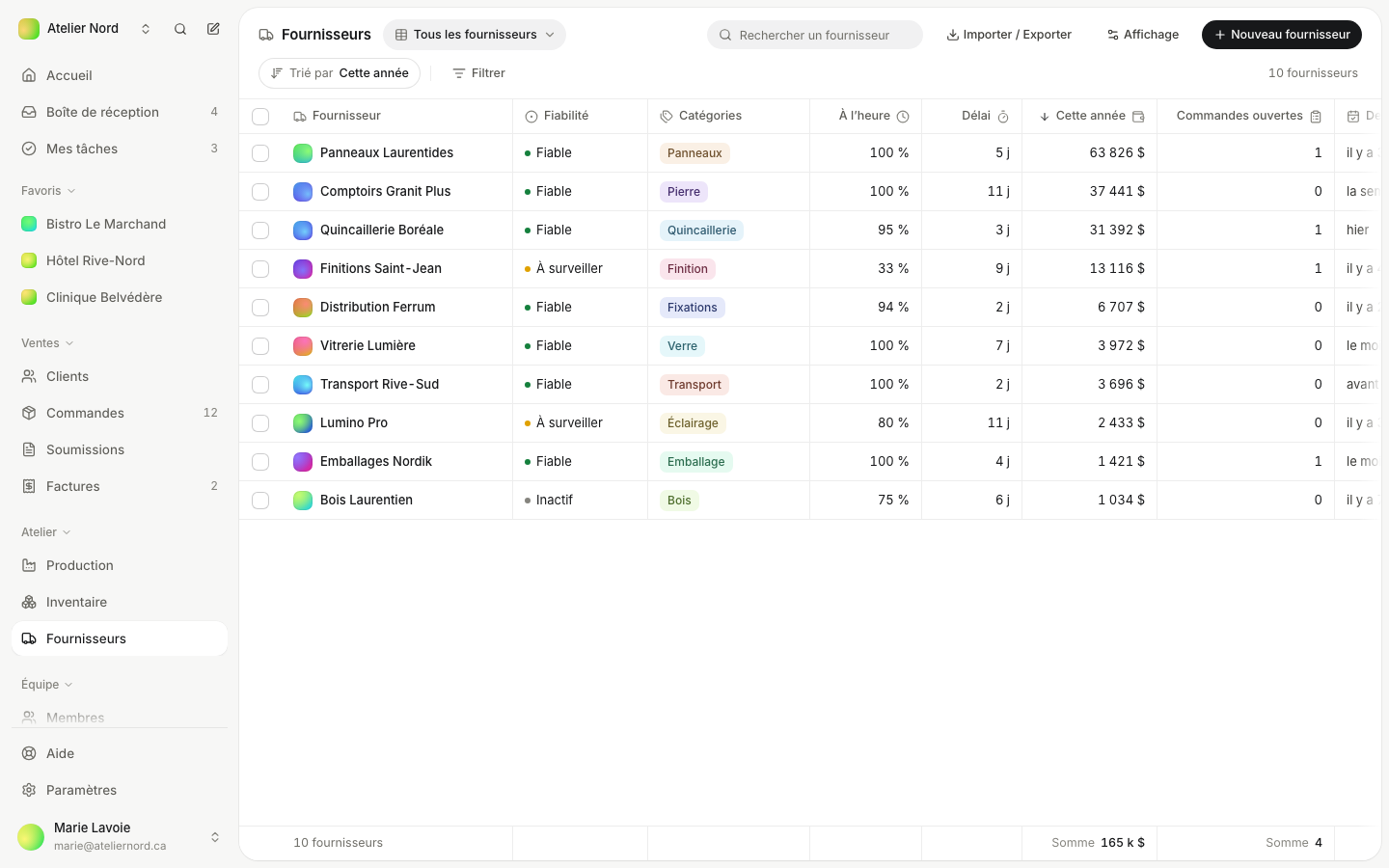
- Suppliers1 screensWho the shop buys from and how they deliver: on time or late, the real lead time against the promised one, what was spent, their items and prices, open orders.
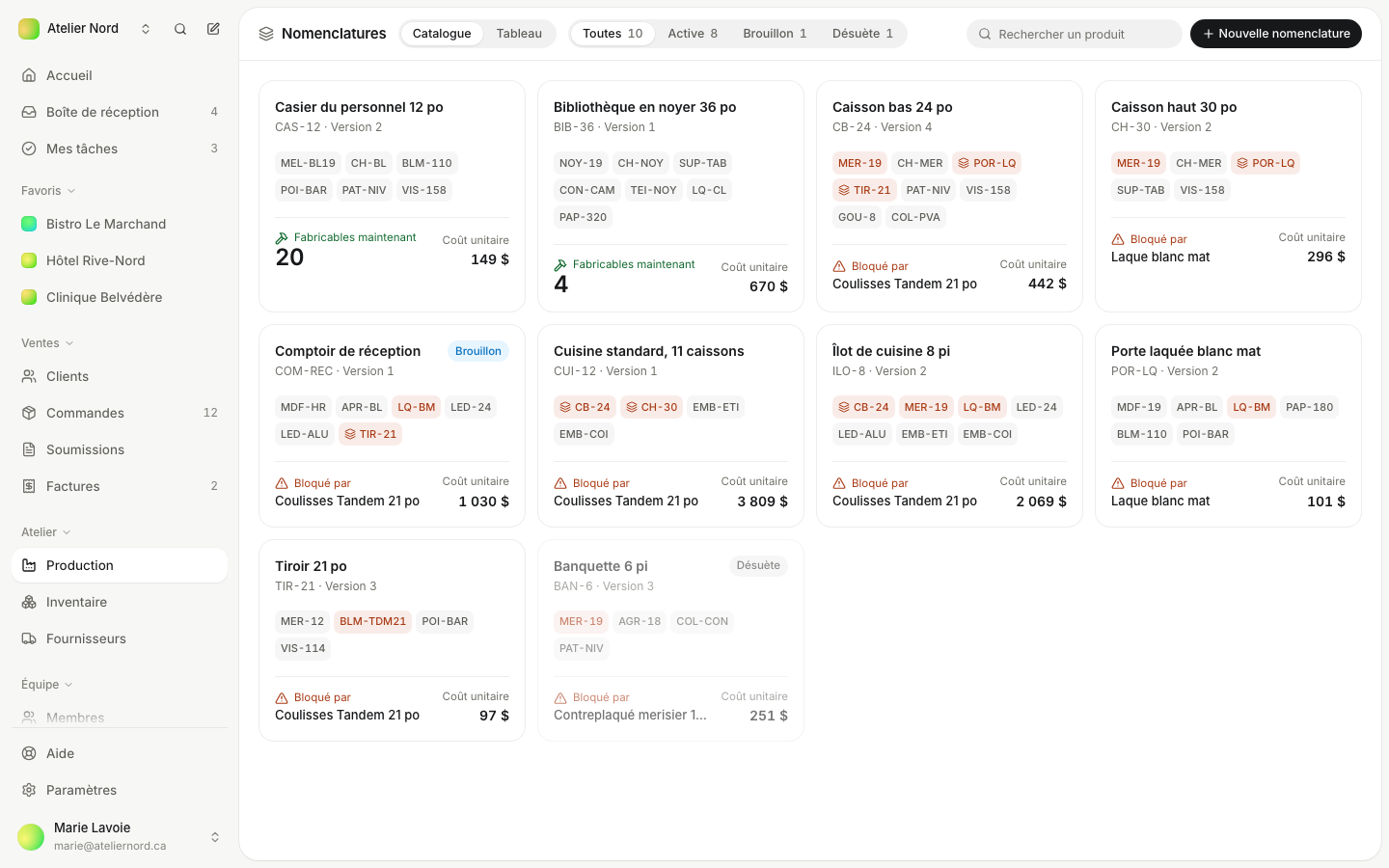
- Bills of materials1 screensWhat each product is made of, level by level: items from the stores and sub-assemblies, time at each station, the unit cost rolled up, and how many can be built with what is free today.